The Ultimate Creative Portfolio Checklist: How to Showcase Your Work and Stand Out
Ready to land your dream creative role? Discover the ultimate portfolio checklist designed for fashion, design, and creative professionals. From mastering typography to leveraging the power of video with Viewnamic, learn how to transform your static PDF into a dynamic showcase that captures attention and proves your worth.

Whether you are breaking into fashion, graphic design, architecture, or any other creative industry, your portfolio is your most valuable asset. It is your visual resume, your first impression, and your ultimate sales pitch. But what exactly separates a decent collection of work from an unforgettable presentation that lands you the job or the client? To help you build an irresistible showcase, we have put together the ultimate creative portfolio checklist. This guide covers the essential elements, crucial design tips, and modern presentation strategies you need to thrive in today’s competitive creative landscape.
The Core Elements: What Belongs in a Creative Portfolio?
Before diving into aesthetics, you need a solid foundation. Every professional portfolio should include the following structural components:
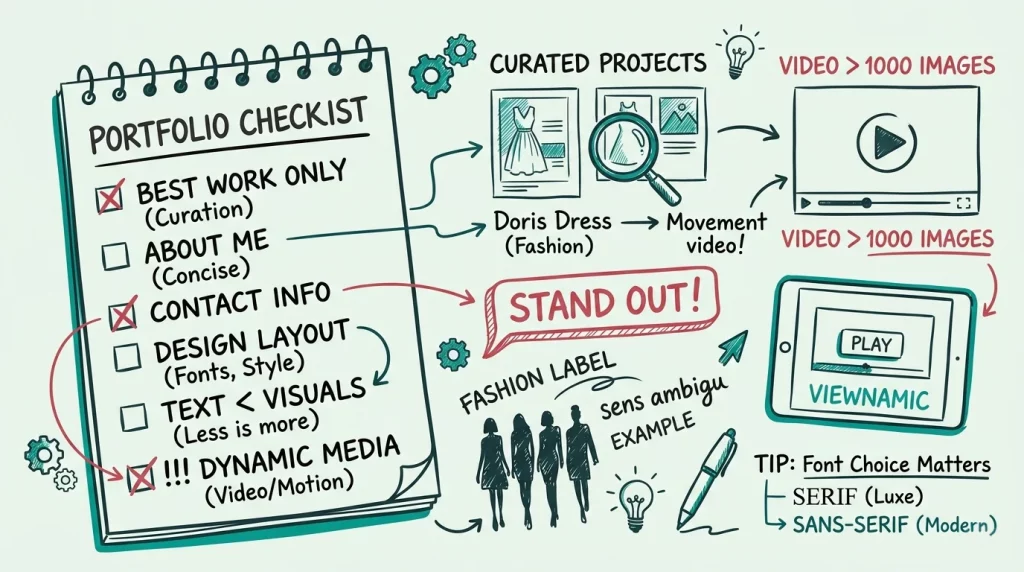
- A Powerful Cover Page: Keep it clean. Include your name, your discipline (e.g., “Fashion Designer” or “UX/UI Designer”), and a visually striking element that represents your style.
- A Short, Impactful “About Me” Section: Introduce yourself briefly. What is your design philosophy? What drives your creativity? Keep it under 150 words.
- Curated Case Studies (3 to 6 Projects): This is the meat of your portfolio. Never include everything you’ve ever done. Show only your absolute best work.
- Clear Contact Information: Don’t make the viewer hunt for your email. Include your email address, phone number, website link, and relevant social handles (like LinkedIn or Behance) on the final page.
Design Tips: Crafting the Perfect Visual Flow
Once you have your content, the way you present it matters just as much as the work itself. Your portfolio is a design project in its own right.
The Golden Rule of Focus: Quality Over Quantity
Curation is your best friend. You are only as good as the weakest piece in your portfolio. If you are debating whether a project is good enough to include, leave it out. The focus should always be on demonstrating your specific skills, problem-solving abilities, and unique creative voice.
Striking the Right Balance of Text and Visuals
How much text is good? The short answer: Less is more. Art directors, recruiters, and clients are busy people; they scan rather than read. However, visuals without context can be confusing.
For each project, include a brief overview containing:
- The Client/Brand: Who was this for? (Even if it was a personal passion project).
- The Problem: What was the brief or the challenge?
- Your Role: Were you the sole designer, the art director, or the illustrator?
- The Solution: A one or two-sentence summary of how you solved the problem.
Use bullet points and short, punchy paragraphs. Let your imagery do the heavy lifting, and use text only to frame the narrative.
Typography That Matches Your Topic
Your font choices subconsciously communicate your brand’s vibe before the viewer even reads a word. Match your typography to your creative discipline:
- Fashion and Luxury: High-contrast serif fonts (like Playfair Display or Bodoni) convey elegance, tradition, and high-end editorial vibes.
- Digital Design and Tech (UX/UI): Clean, geometric sans-serif fonts (like Montserrat, Helvetica, or Inter) communicate modernity, clarity, and usability.
- Edgy, Experimental, or Urban Art: Monospace fonts or brutalist, chunky display fonts can show personality, provided they remain legible.
Pro-Tip: Stick to a maximum of two font families—one for your headings and one for your body copy. Consistency is key to a professional look.
The Future of Presentation: Bringing Portfolios to Life
For decades, static PDFs and printed books were the industry standard. But the creative world has evolved. Today, motion is everything.
It is a well-known saying that an image tells more than a thousand words, but a single video can tell more than a thousand images. Video content is the modern way of presenting your work. If you are a fashion designer, a static photo of a dress is great, but a video of that dress moving on a runway or blowing in the wind communicates the texture, the drape, and the life of the garment. If you are a digital designer, a video walkthrough of an app interface is infinitely more engaging than flat screenshots. Incorporating dynamic media proves that you understand modern consumption habits and allows your audience to experience your work, not just look at it.
Elevate Your Pitch: Stand Out with Viewnamic
Knowing that video is the future is one thing, but figuring out how to present it cleanly can be a technical headache. Standard PDFs don’t support high-quality video playback well, and sending large video files via email is unprofessional.
This is where you can truly stand out from the crowd by using Viewnamic.
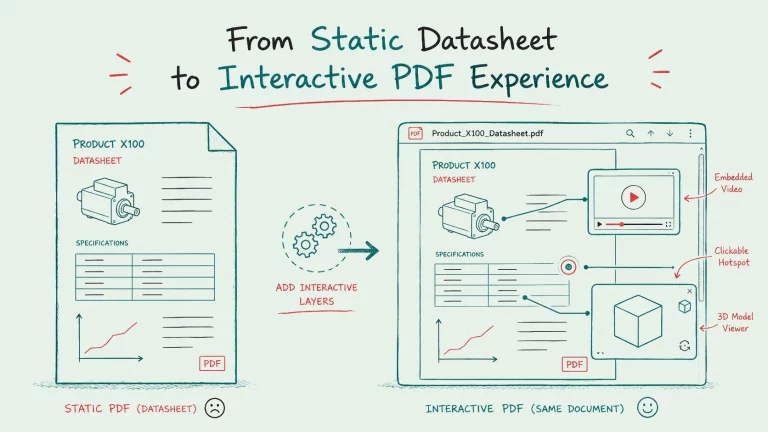
Viewnamic is an innovative, web-based software that revolutionizes the traditional portfolio. It allows you to seamlessly integrate dynamic content—like high-resolution videos, 3D models, or interactive click-dummies—directly into your PDF presentations.
Instead of dealing with clunky third-party links or broken file formats, you simply upload your portfolio PDF to Viewnamic and place your dynamic media precisely where you want it. When you send your portfolio to a client or recruiter, they open it via a Viewnamic link in a PDF-Viewer you have designed matching your personality or brand. The videos and 3D elements are playing beautifully while maintaining the natural scrolling and reading experience of a traditional document.
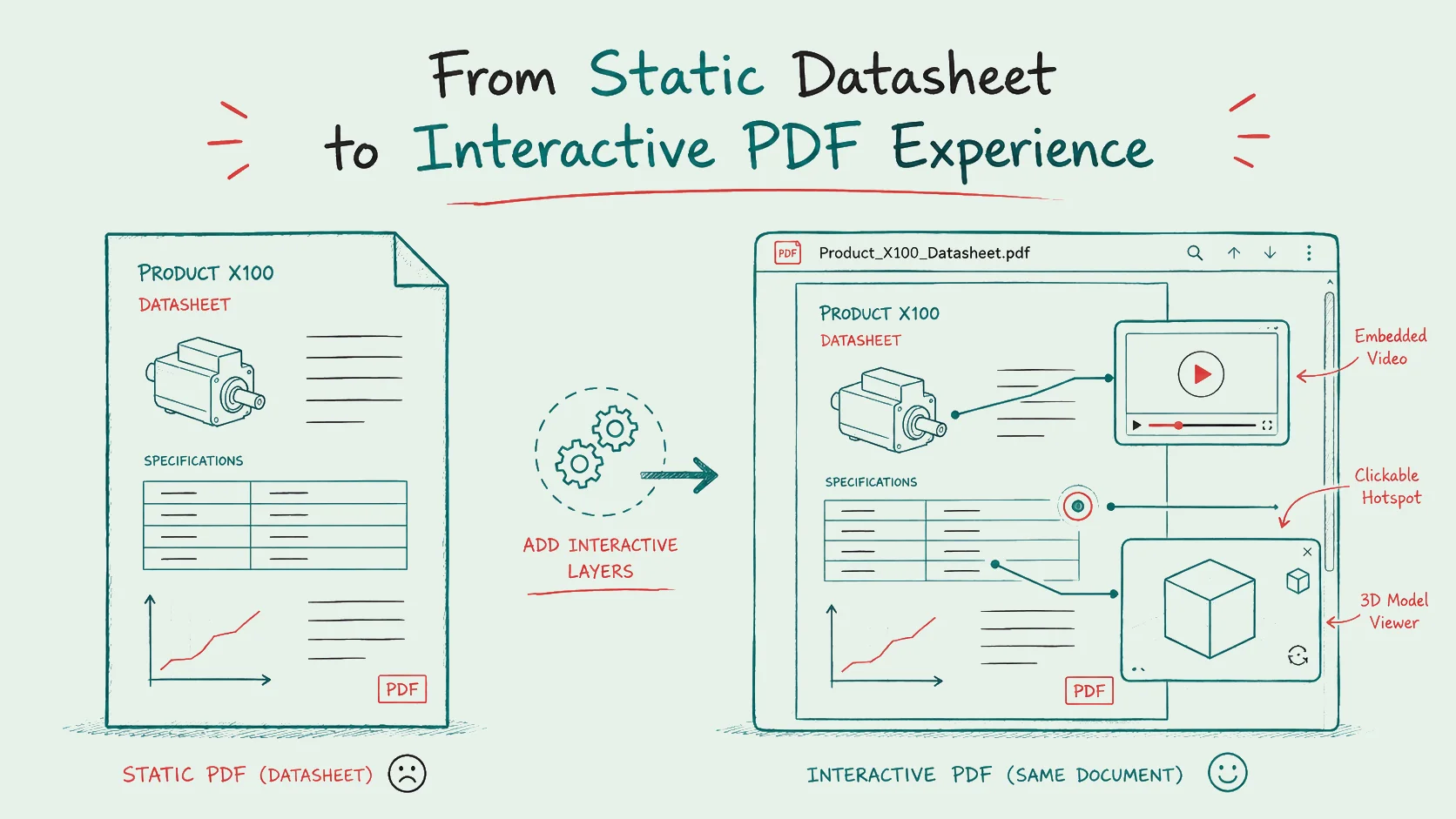
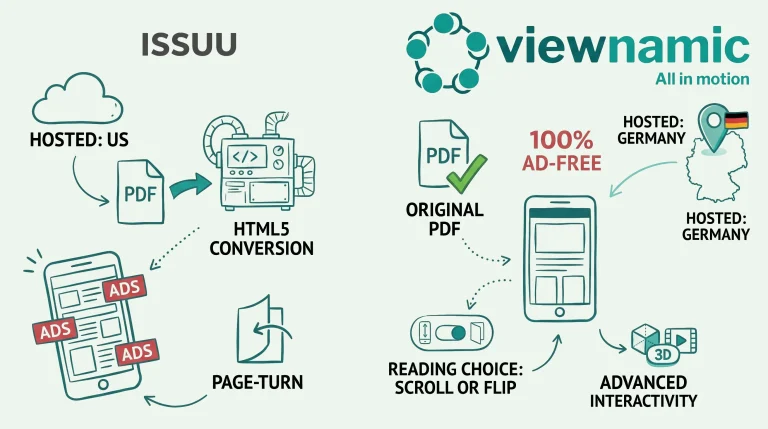
The original PDF remains entirely unchanged, there are no awkward flipbook animations, and as a massive bonus, Viewnamic provides you with interaction statistics so you can see exactly how long a recruiter spent looking at your work.
Real-World Example: Lennart’s “Sens Ambigu”
To see exactly how powerful this can be, look at the portfolio of fashion designer Lennart for his label, sens ambigu.
In fashion, showing the movement of fabric and the atmosphere of a shoot is critical. By utilizing Viewnamic, Lennart transformed what would have been a static lookbook into a dynamic, immersive experience. You can see his brilliant implementation here: Sens Ambigu Portfolio via Viewnamic
Notice how the video content instantly grabs your attention and elevates the perceived value of the designs, all without disrupting the clean layout of the document itself.
Ready to Build Your Masterpiece?
Building a breathtaking creative portfolio takes time, rigorous curation, and an eye for layout. By following this checklist—focusing on your best work, balancing your text, choosing the right typography, and embracing the power of video—you will position yourself leagues ahead of the competition.
Don’t settle for flat, uninspiring presentations when the modern tools to showcase your true potential are right at your fingertips. Curate your best projects, design your layout, and use a tool like Viewnamic to inject life and motion into your pitch. Start building your portfolio today, and let your creative work speak—and move—for itself!
Last updated:
Publish your PDFs with Viewnamic
Host, share and enhance your documents – free for 30 days.