Why Multimedia PDFs Are The Next Big Leap
From cave paintings to paper, print and PDFs, humans have always improved how they share information. Now the next evolution is here: multimedia PDFs that combine familiar documents with video, interaction and dynamic content.

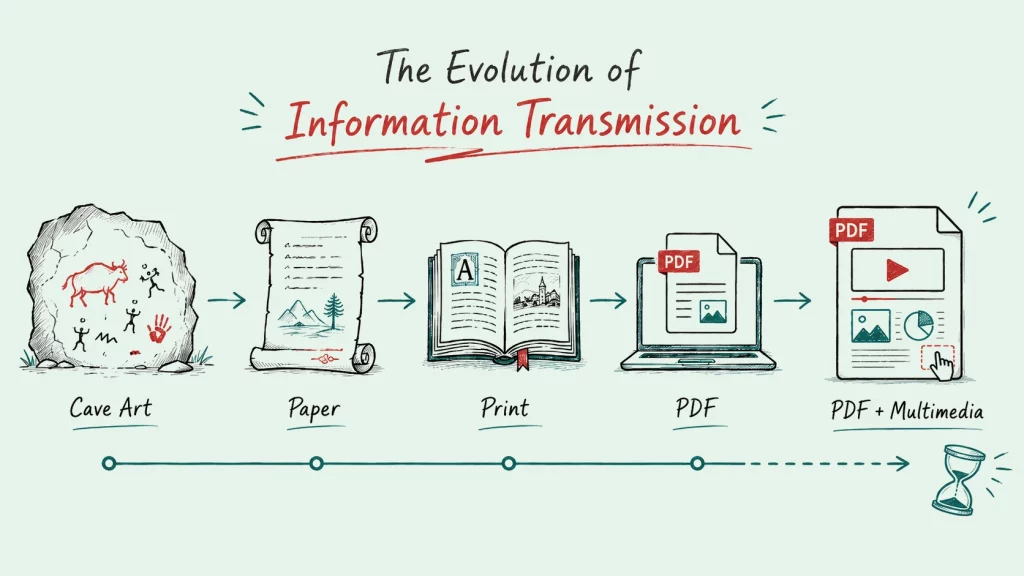
Information has always moved humanity forward. From the first cave paintings to modern multimedia PDF documents, people have constantly searched for better ways to explain ideas, preserve knowledge and make information easier to understand. Every time a new medium made communication more visual, more precise or more engaging, we adopted it.
Now we are entering the next stage of digital documentation: PDF documents with dynamic and interactive media. And for businesses, creators and professionals, this shift is not just a technical upgrade. It is a natural continuation of how humans have always shared information.
From Cave Paintings to Written Documents
Long before paper, printing or computers existed, humans already had a powerful need to document what mattered. Early Homo sapiens and Neanderthals used cave paintings to show animals, hunting scenes, symbols and stories. These paintings were more than decoration. They were one of the earliest forms of visual documentation.
They helped people communicate across time.
A drawing on a cave wall could explain something that spoken language could not preserve forever. It made information visible. It made experiences shareable. It turned knowledge into something others could see, interpret and remember.
Why visuals became essential
Even at the beginning of human communication, one thing was clear: visual information is powerful.
A picture can show relationships, movement, shape and context faster than words alone. That is why humans kept developing better ways to create and transmit visual information. We moved from simple marks on stone to drawings on surfaces, then to written symbols, manuscripts and structured documents.
Each step gave us more control over how information could be captured.
Paper Changed How Humans Shared Knowledge
The invention and spread of paper changed everything. Suddenly, information became portable. Instead of being fixed on walls or carved into heavy materials, knowledge could travel.
People could write instructions, contracts, maps, letters, religious texts, scientific notes and educational materials. Paper made information easier to store, duplicate and distribute.
But for a long time, documents were limited to two main elements:
• Text
• Static images
That may sound simple today, but it shaped civilization. Text made abstract thoughts precise. Images made complex ideas visible. Together, they created the foundation of documentation as we still understand it.
Better documents meant better communication
Over time, people did not just write more. They improved the way documents looked and worked.
Drawings became more accurate. Technical illustrations became more precise. Layouts became more structured. Architects, engineers, scientists and business people all depended on better documentation to explain complex ideas.
Whenever humans had the chance to make information clearer, more beautiful or more useful, they did it.
That pattern is important, because it has never stopped.
The Printing Press Made Information Scalable
The printing press was one of the biggest leaps in the history of information transmission. Before printing became widespread, documents had to be copied by hand. That made information slow, expensive and limited.
Printing changed the economics of knowledge.
Books, brochures, newspapers, manuals and official documents could now reach many more people. Information became scalable. Ideas spread faster. Education became more accessible. Businesses could communicate with larger audiences.
And again, the same human pattern appeared: once people could improve the medium, they did.
Printing became more advanced. Typography improved. Images became more detailed. Color printing entered everyday use. Documents became more professional, persuasive and visually appealing.
The goal was always the same: make information easier to understand and more compelling to consume.
The Computer Created a New Information Space
Then came the computer. Suddenly, information no longer had to live only on paper. It could be created, stored, copied and shared digitally.
This was a revolutionary shift, but it also created a problem.
People still needed something in the digital world that behaved like paper. We needed a reliable format that could preserve layout, fonts, images and structure across different devices and operating systems.
That is why the PDF became so important.
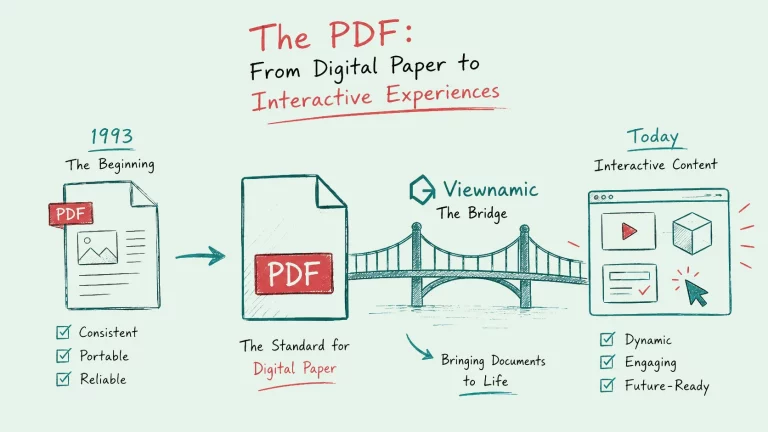
The PDF gave us a digital document that felt familiar. It looked like paper, but it could move through the internet. It could be opened on different devices. It could preserve a brochure, contract, report, presentation, manual or portfolio exactly as intended.
In many ways, the PDF became digital paper.
Why the PDF Became the Standard for Digital Documents
The success of the PDF is not accidental. It solved a basic human need: the need to share structured information in a stable format.
A PDF is predictable. It is easy to send. It is easy to archive. It works for business communication, education, sales, marketing, legal documents and technical documentation.
But the PDF also inherited the limitations of paper.
Most PDF documents still rely on the same two elements humans have used for centuries:
• Text
• Static images
That worked for a long time. But the digital world has changed how people expect to receive information.
Today, you do not only read online. You watch, click, scroll, interact and explore.
The Next Step: Interactive Media in PDF Documents
The digital age gives us something paper never could: dynamic and interactive media.
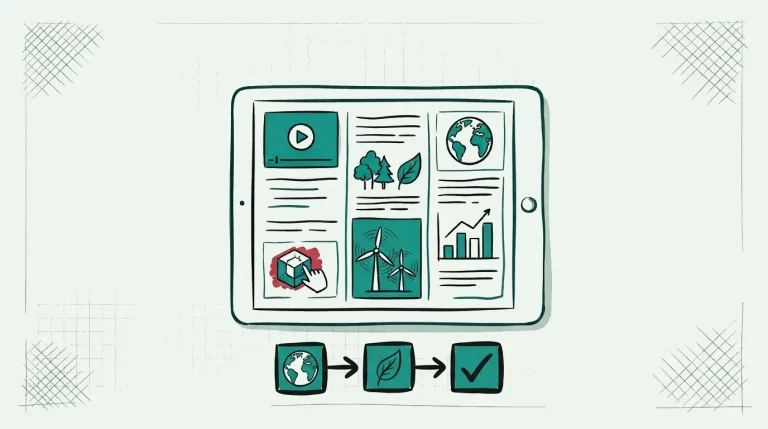
Videos can explain processes faster than paragraphs. Three dimensional models can show objects from every angle. Clickable prototypes can demonstrate software before it is built. Interactive elements can guide users through information instead of forcing them to imagine it.
This is the next natural step in document evolution.
Not because text and images are outdated. They are still essential. But they are no longer enough for every use case.
Why multimedia documents matter now
A modern document can do more than present information. It can create an experience.
With multimedia documents, you can:
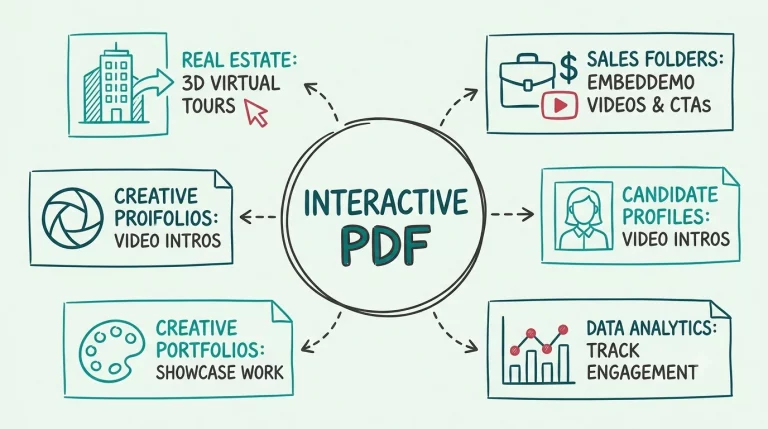
• Add video to a PDF to explain a product, property or process
• Include interactive content in a sales folder
• Present three dimensional models in technical documentation
• Turn a static portfolio into a more engaging experience
• Make a digital brochure feel alive without replacing the PDF format
This is especially valuable when information is complex, emotional or visual. Real estate exposés, product presentations, pitch decks, resumes, insurance documents, manuals and portfolios can all benefit from dynamic media.
The reason is simple: people understand faster when they can see more.
Why Multimedia PDFs Are the Logical Evolution of Documentation
Look at the full history.
First, humans painted on cave walls. Then they wrote on paper. Then they printed documents at scale. Then they created digital documents. Each step made information easier to preserve, distribute or understand.
Now we have reached the point where digital documents can become more than digital paper.
The next evolution is not replacing the PDF. The next evolution is enhancing it.
That matters because PDFs are already deeply embedded in professional workflows. Businesses do not want to abandon their brochures, proposals, manuals or documents. They want to make them more effective.
This is exactly where interactive PDF experiences become powerful. A document can keep its familiar structure while gaining the engagement of modern digital media.
Viewnamic Makes Dynamic Documents Simple
Viewnamic was built around one clear idea: you should be able to make a PDF more engaging without destroying what makes a PDF useful.
With Viewnamic, you can upload your PDF, choose a position in the document and place dynamic content such as videos, three dimensional models or clickable prototypes on top of it in the Viewnamic Web Viewer. The original PDF remains unchanged, while the viewer creates the impression that the dynamic content is naturally part of the document.
That means you get the best of both worlds.
You keep the clarity and familiarity of the PDF. At the same time, you add the engagement of modern media.
For users, this makes it easier to understand your content. For businesses, it creates a more memorable and measurable document experience.
The Future of Documents Is Dynamic
Human communication has always evolved in the same direction: from simple to richer, from static to more expressive, from limited to more engaging.
The PDF was a major milestone in that story. It brought paper into the digital world. But now the digital world offers something paper never could: multimedia, interaction and dynamic experiences.
The next generation of documents will not only be read. They will be watched, explored and interacted with.
And Viewnamic makes this transition simple.
If you already use PDFs for sales, real estate, recruiting, product presentations, portfolios or customer communication, now is the right time to take the next step. Turn your static PDF into a dynamic document experience and show your audience more than words and images ever could.
Publish your PDFs with Viewnamic
Host, share and enhance your documents – free for 30 days.